

The challenge
The chambers held the mixture a yard interceptor always collects: silt, grit and hydrocarbon, in proportions that are not known until it is opened.
An interceptor that is not emptied stops separating. Once the silt bed reaches the outlet, oil passes straight through to the drainage system it was installed to protect, which is why the interval between cleans matters as much as the clean itself.
What we arranged
We attended, established what the chambers held, and classified the recovered material before anything was moved. The clean was carried out by a contractor we appointed and checked, and the sludge went to a permitted facility authorised to take it.
The transfer documentation for the load went back to the site together with a written record of the classification and the reasoning behind it, as it does on every project.
The result
The interceptor was returned to working condition and the recovered material was disposed of through a permitted route with full duty-of-care paperwork. We also left the site with a recommended inspection and emptying interval for the future.
On site
-
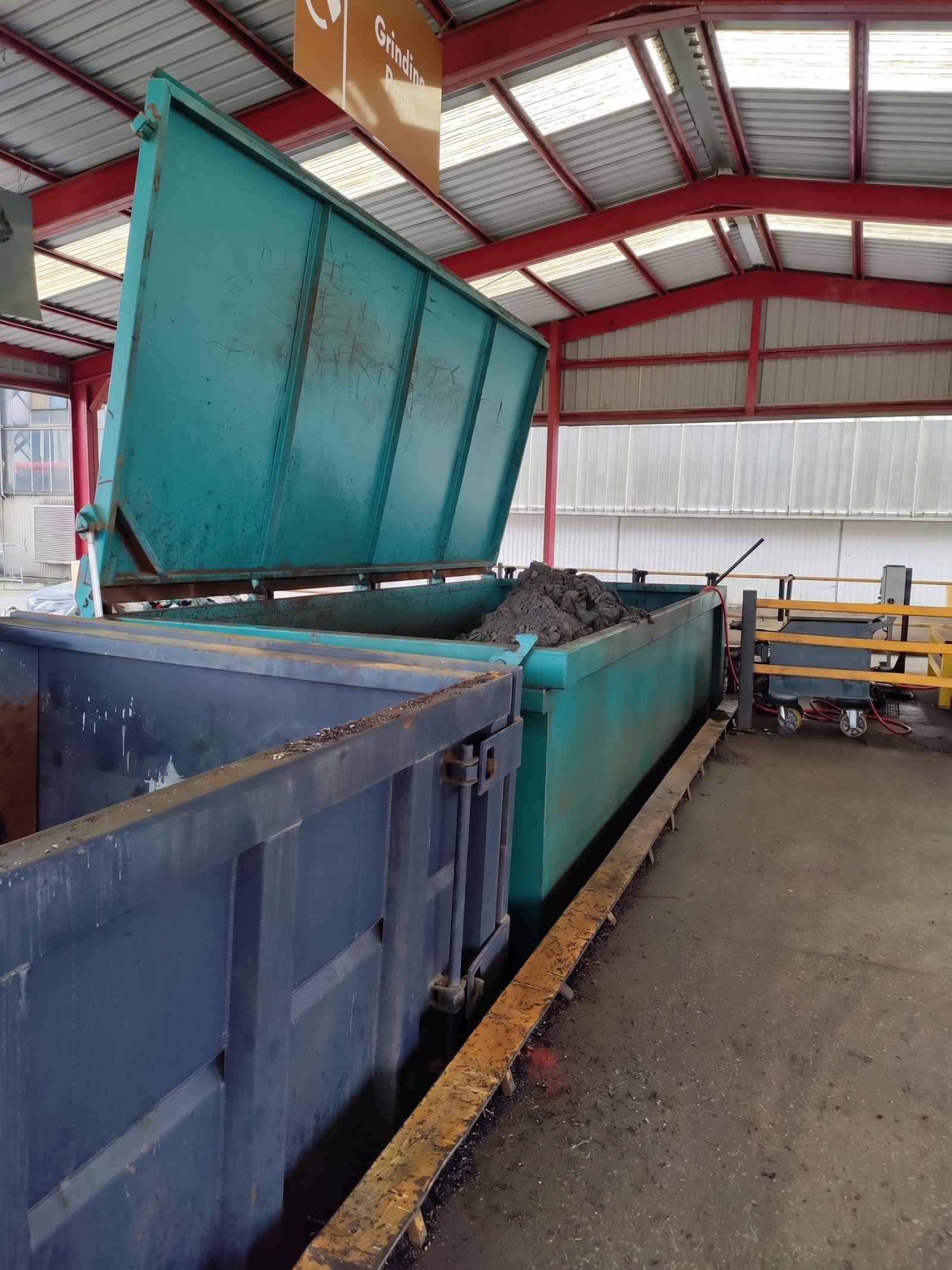
The recovered sludge in a lidded skip at a transfer station, awaiting disposal at a permitted facility.
