

The challenge
The depot ran a compound of bulk fuel tanks, both tall vertical storage tanks and horizontal cylindrical tanks, holding a range of fuel oils across separate lines: gas oil, road derv, PBO and carderv among them. Tanks like these need periodic cleaning to keep the product on specification and to let the tanks be inspected.
The difficult part of a fuel tank is rarely the fuel. It is what settles at the bottom: water, silt, sediment and waxy tank bottoms that build up over years of use. That residue is frequently hazardous when the product above it was not, and it has to be identified and classified correctly before any of it can be moved.
The work also had to be carried out safely on a live, operational petroleum site, within a bunded compound, around flammable-product signage and existing pipework, in wet conditions.
What we arranged
AES managed the project from survey to completion, appointing and overseeing the specialist operatives rather than carrying out the disposal itself.
- Survey and method. We attended to establish what each tank held, what was in the bottom of it, how it was accessed and whether entry would be required, and set the method statement accordingly.
- Appointing operatives. The cleaning was carried out by vetted, licensed operatives we appointed and checked, working to the agreed method with the correct equipment and permits for a live fuel site.
- Isolate and clean. Each tank was isolated and purged, the residues were removed, and the internal surfaces were cleaned to the standard the next use required.
- Classify the residues. We classified the recovered material and applied the correct waste code before anything left site, rather than describing the sludge as though it were the fuel.
- Arrange compliant disposal. The residues were consigned through licensed carriers to permitted facilities authorised to accept them. AES arranges the disposal route: we do not haul or tip the waste ourselves.
The result
The tanks were returned to a clean condition, ready for inspection and continued service, and the recovered residues were disposed of through a permitted route.
The complete duty-of-care file went back to the site, as it does on every project: a transfer or consignment note for every movement, the classification behind each code, and confirmation of the permitted facility that received each stream.
On site
-
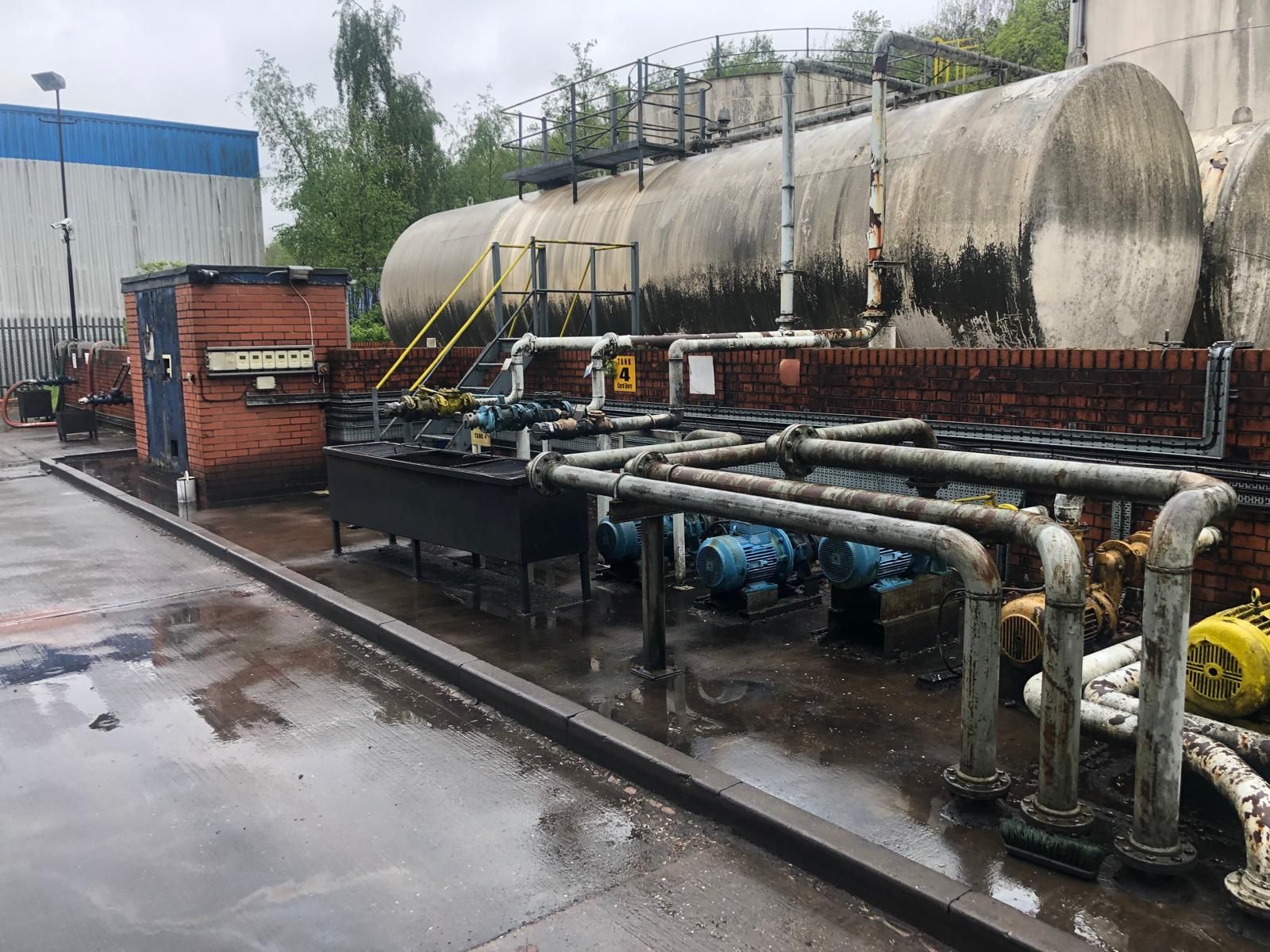
The tank compound and transfer pump manifold. -
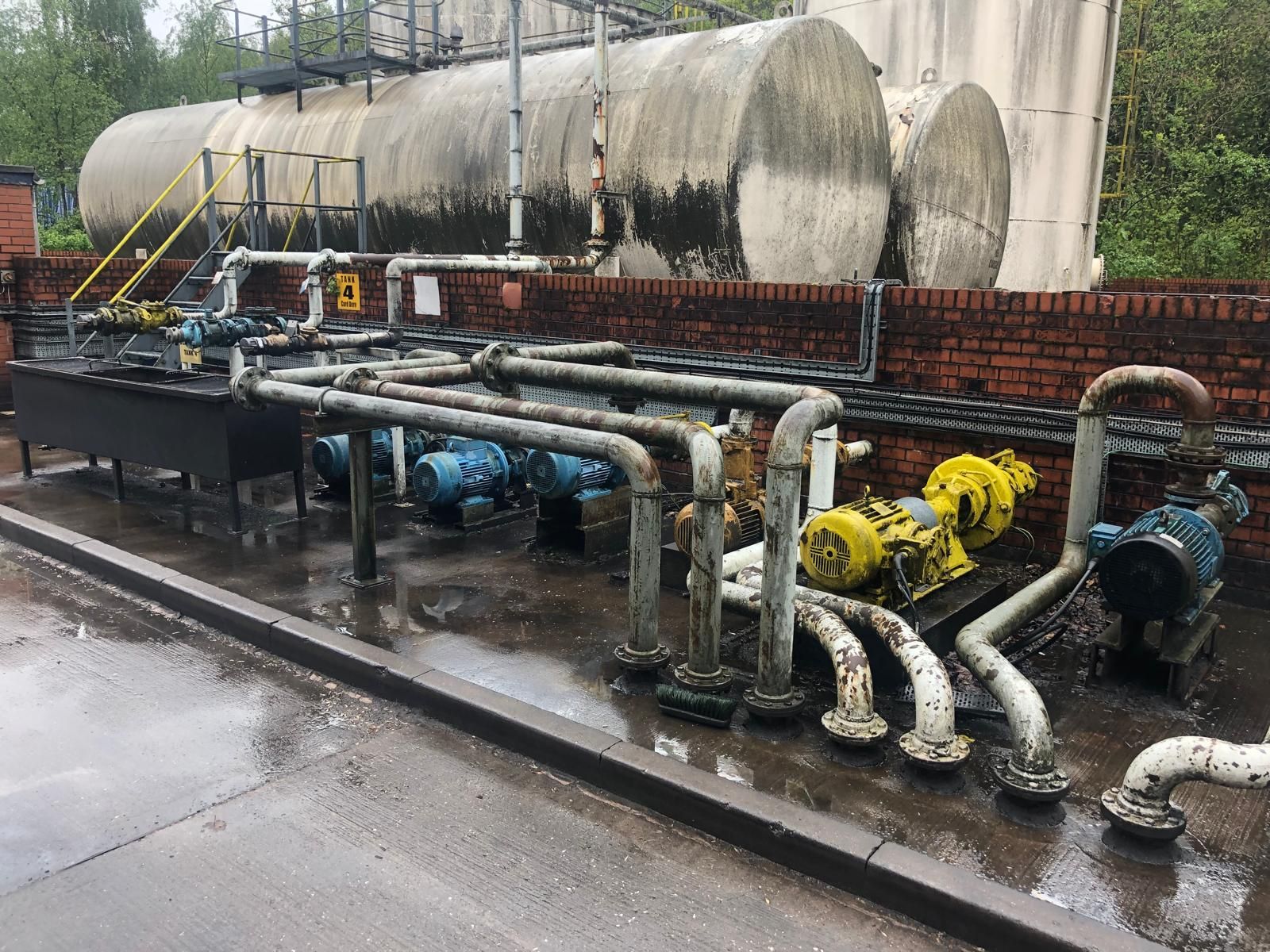
The pump and pipework manifold serving the tanks. -
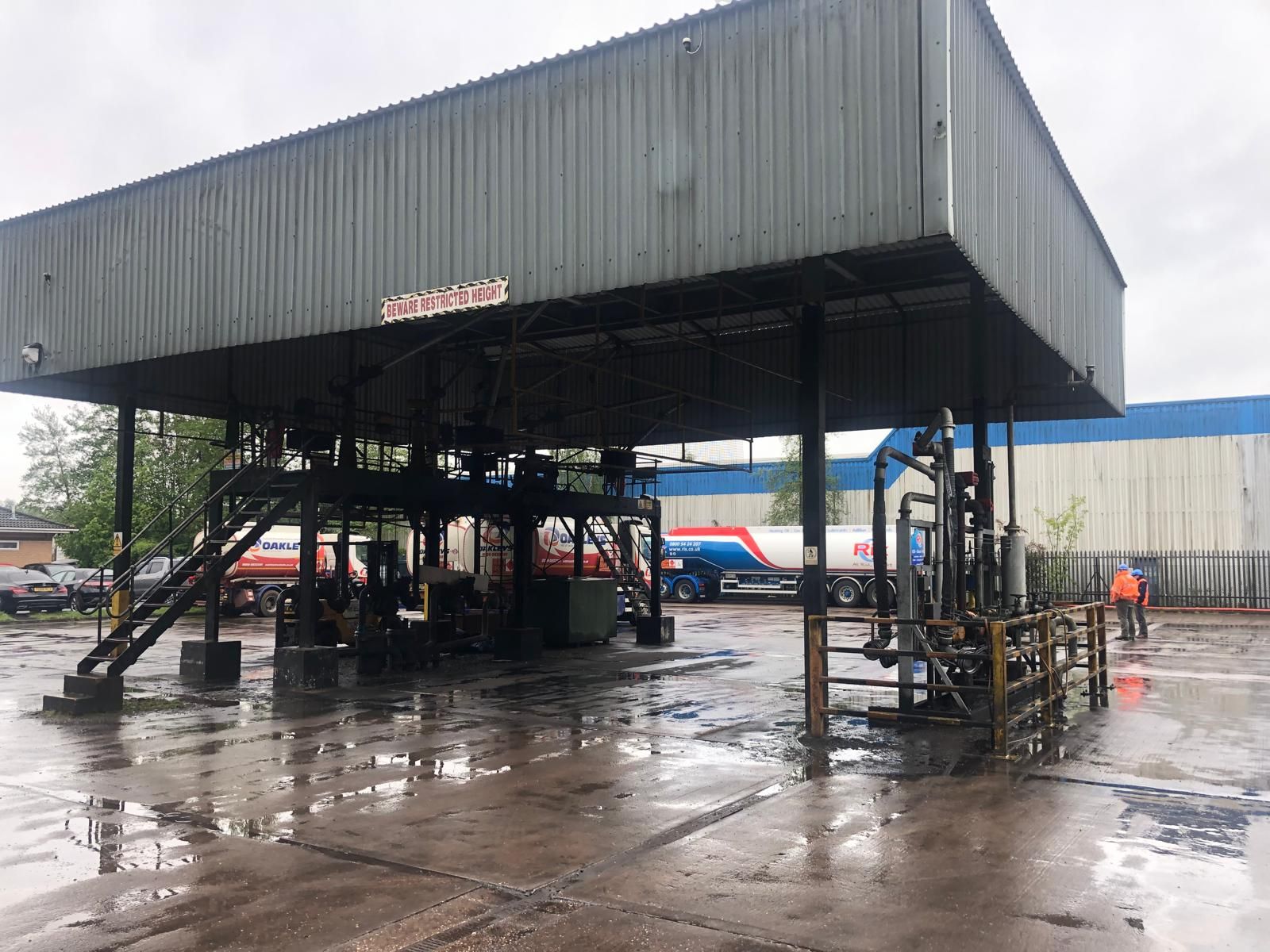
The tanker loading gantry at the depot during the works. -
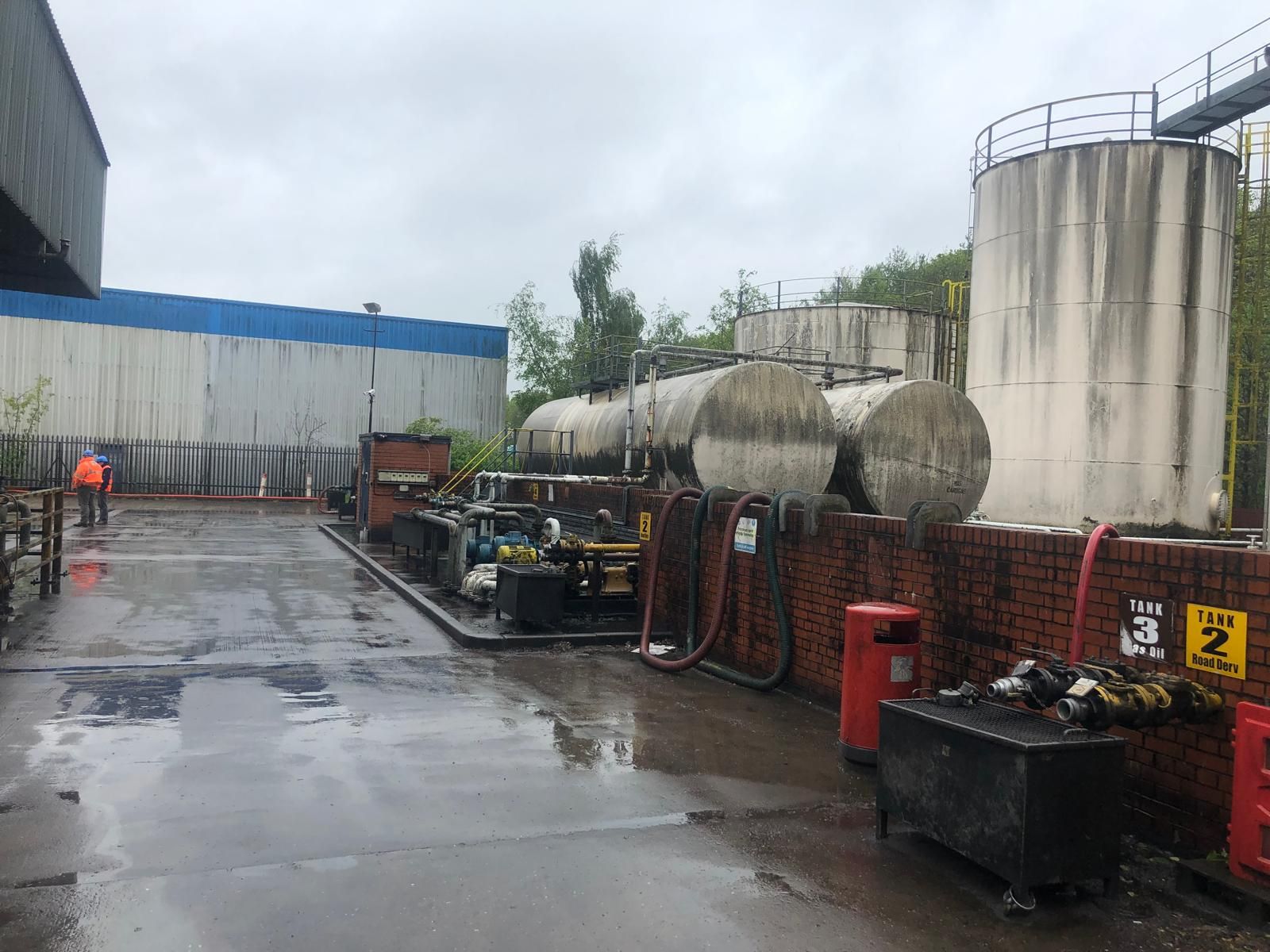
Operatives on site at the tank farm during the clean. -
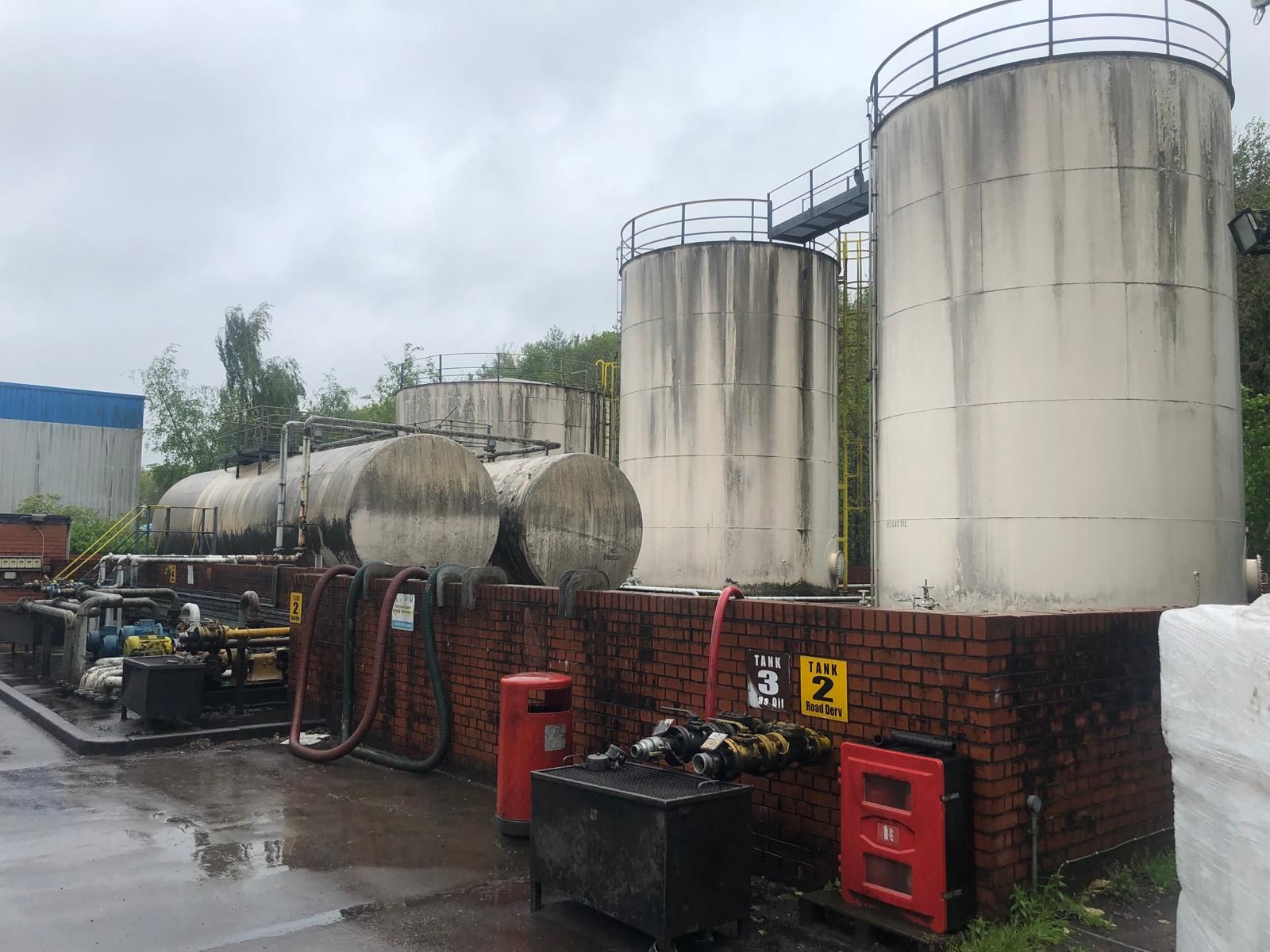
The vertical storage tanks and bunded hose connections. -
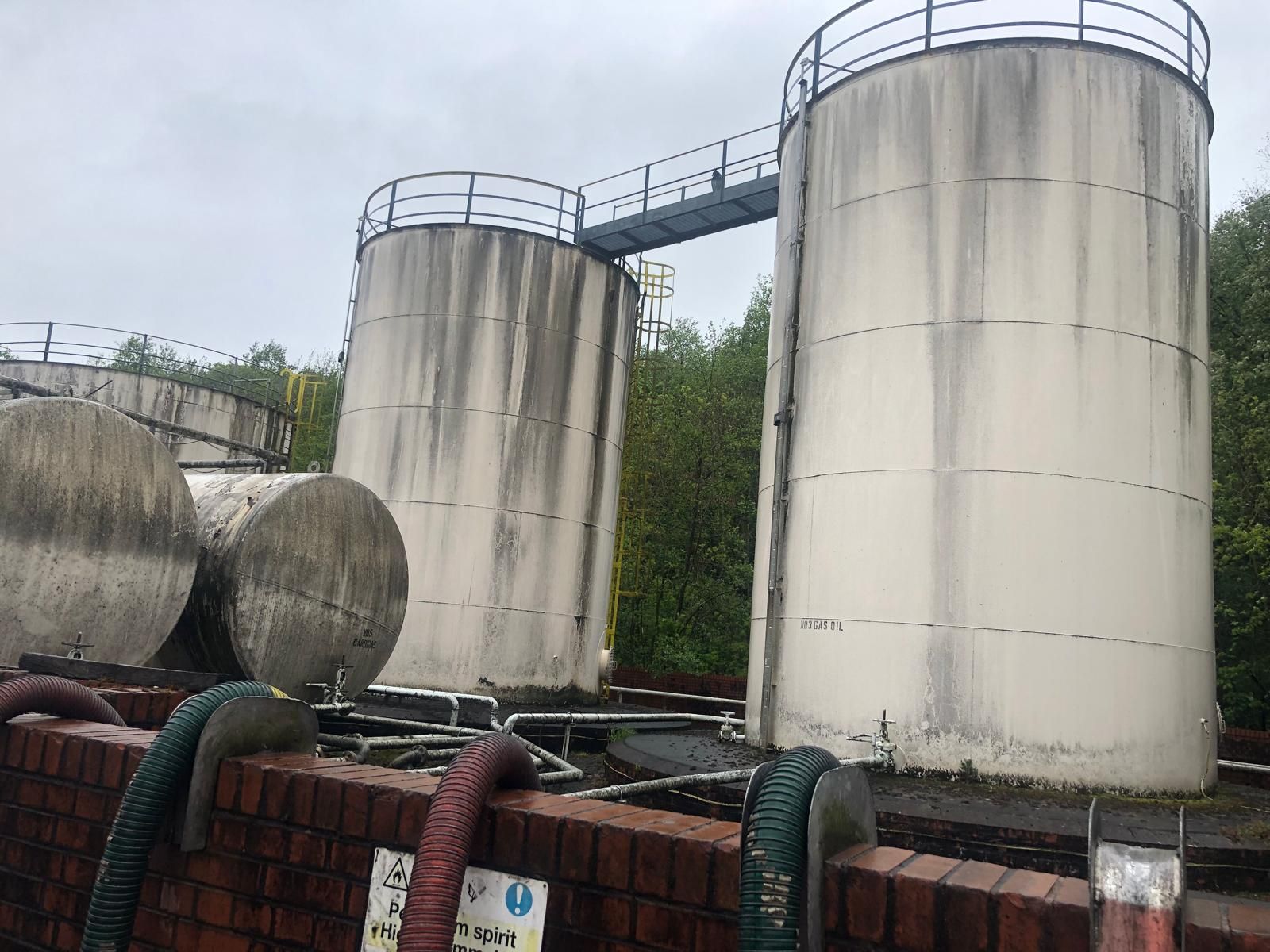
Suction hoses run to the vertical gas oil tanks. -
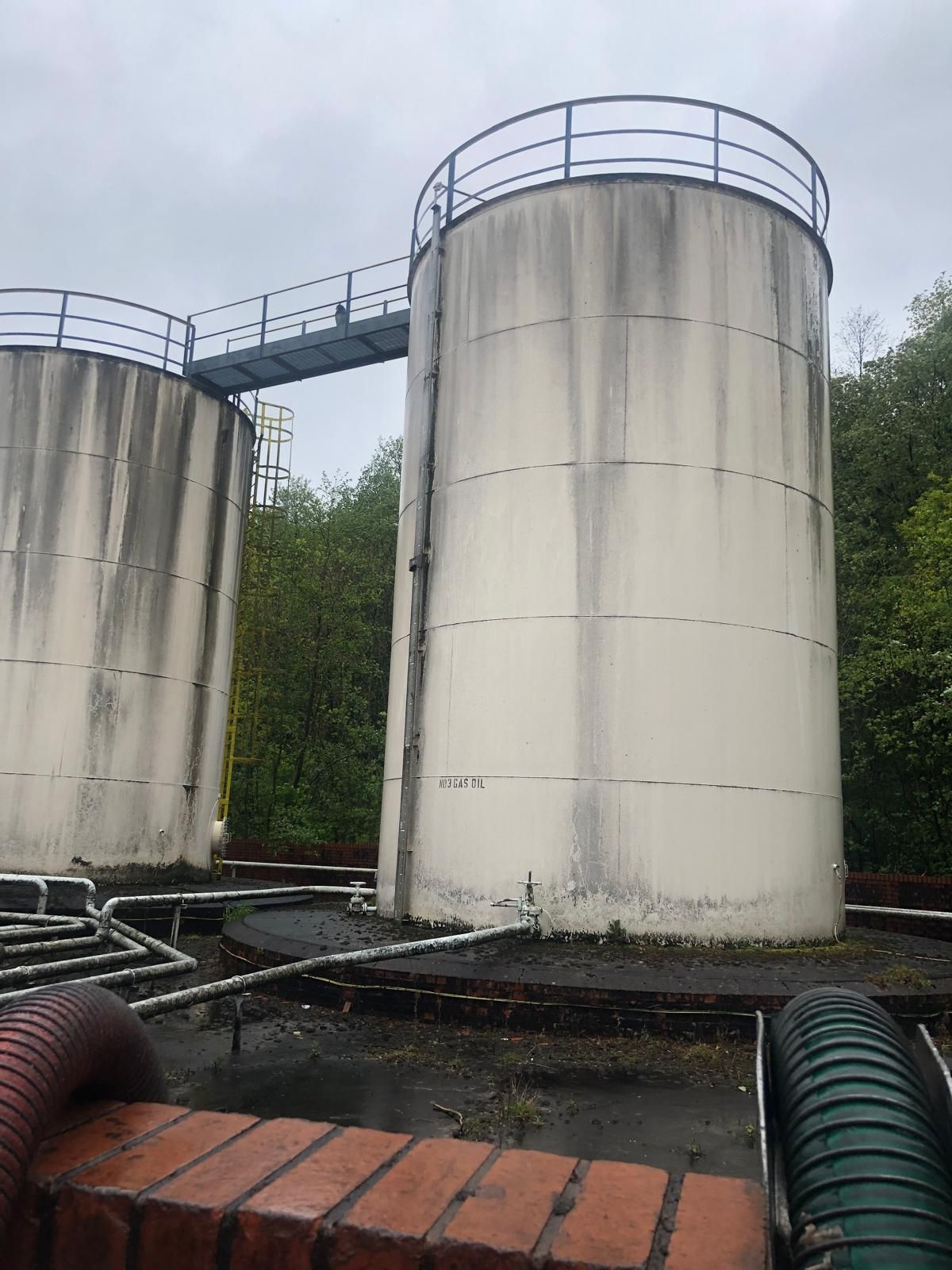
Access gantry and ladder between the vertical tanks. -
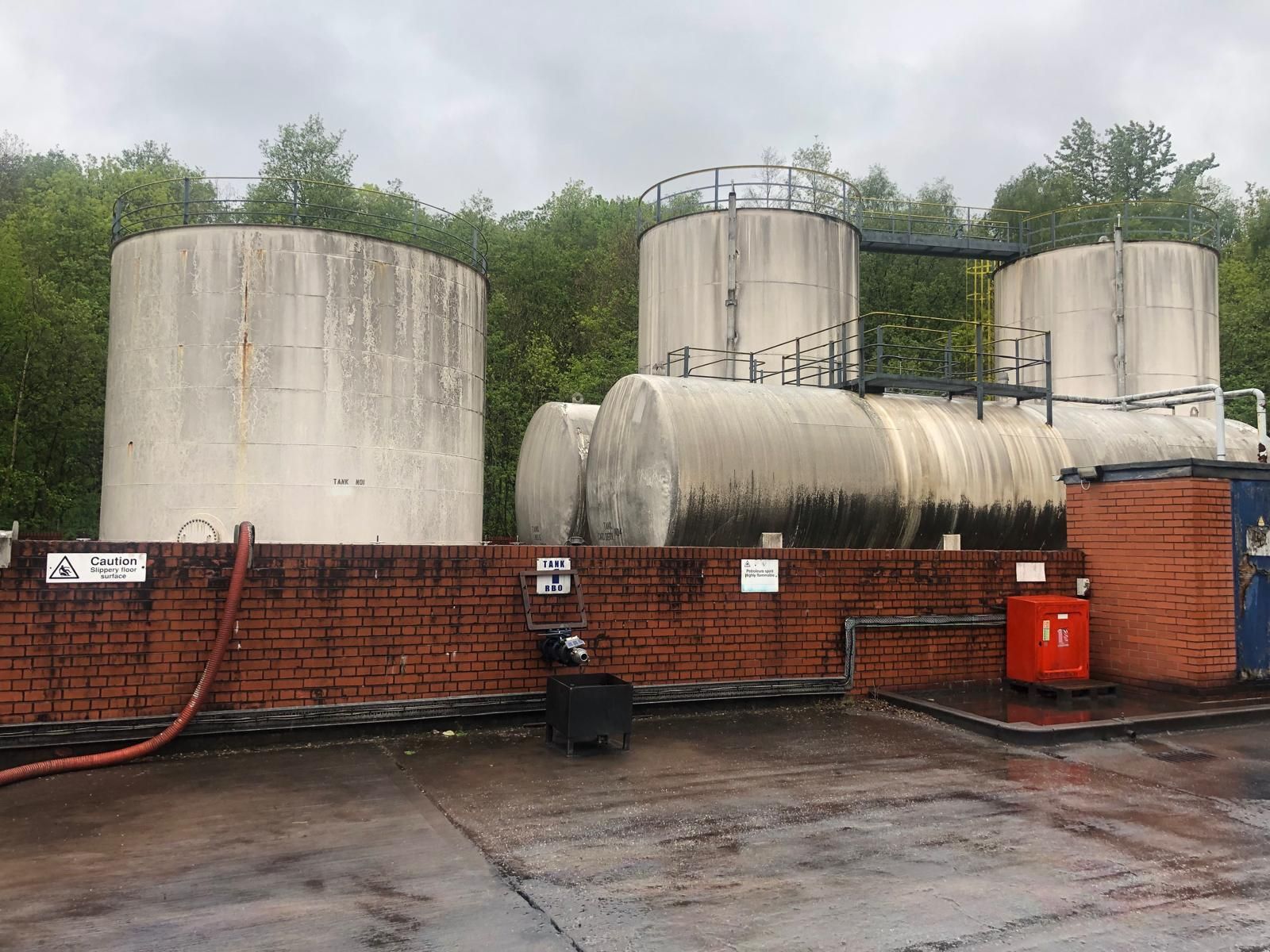
The wider tank farm, with product and safety signage.


