

The challenge
Closing a site is not the same as emptying a room. Everything that had accumulated over the working life of the premises had to leave at once, and it was not one kind of waste — general and bulky waste, redundant stock and packaging, and a quantity of part-used chemicals in drums, jerrycans and containers, each of which had to be identified before it could be coded.
Three things had to hold at the same time. Every stream had to be categorised correctly, so that nothing hazardous travelled on the wrong paperwork and nothing ordinary was charged at a hazardous rate. Recycling had to be maximised wherever it was practical, rather than sending mixed loads to landfill by default. And all of it had to be evidenced and finished in time for the site to be handed back on the agreed date.
What we arranged
We managed the closure from first inspection to final handover, appointing and overseeing the third-party providers rather than collecting or moving anything ourselves.
- Site inspection. We attended the premises to categorise the waste and identify what could be recycled, so the project was costed and planned against what was actually there.
- Quotation. We submitted a written quotation to the customer covering the whole clearance.
- Approval. The quote was approved and the work was scheduled.
- Provider selection. We reviewed and allocated cost-efficient, vetted third-party providers, matching each waste stream to a permitted facility authorised to take it.
- Scheduling and allocation. We scheduled and allocated the work, handled by AES and allocated to the appointed suppliers, so the clearance ran in the right order to the handover deadline.
- Project management. We carried out regular site inspections and managed the project throughout, checking that each stream was segregated, moved and documented correctly.
The result
The site was cleared to schedule and handed back on time. The waste was segregated into its separate streams rather than cleared as one mixed load, with recycling maximised wherever it was practical to do so.
The complete duty-of-care file went back with the site, as it does on every project: a transfer or consignment note for every movement, the classification behind each code, and confirmation of the permitted facility that received each stream. The premises was left clear and ready for the closure to complete.
On site
-
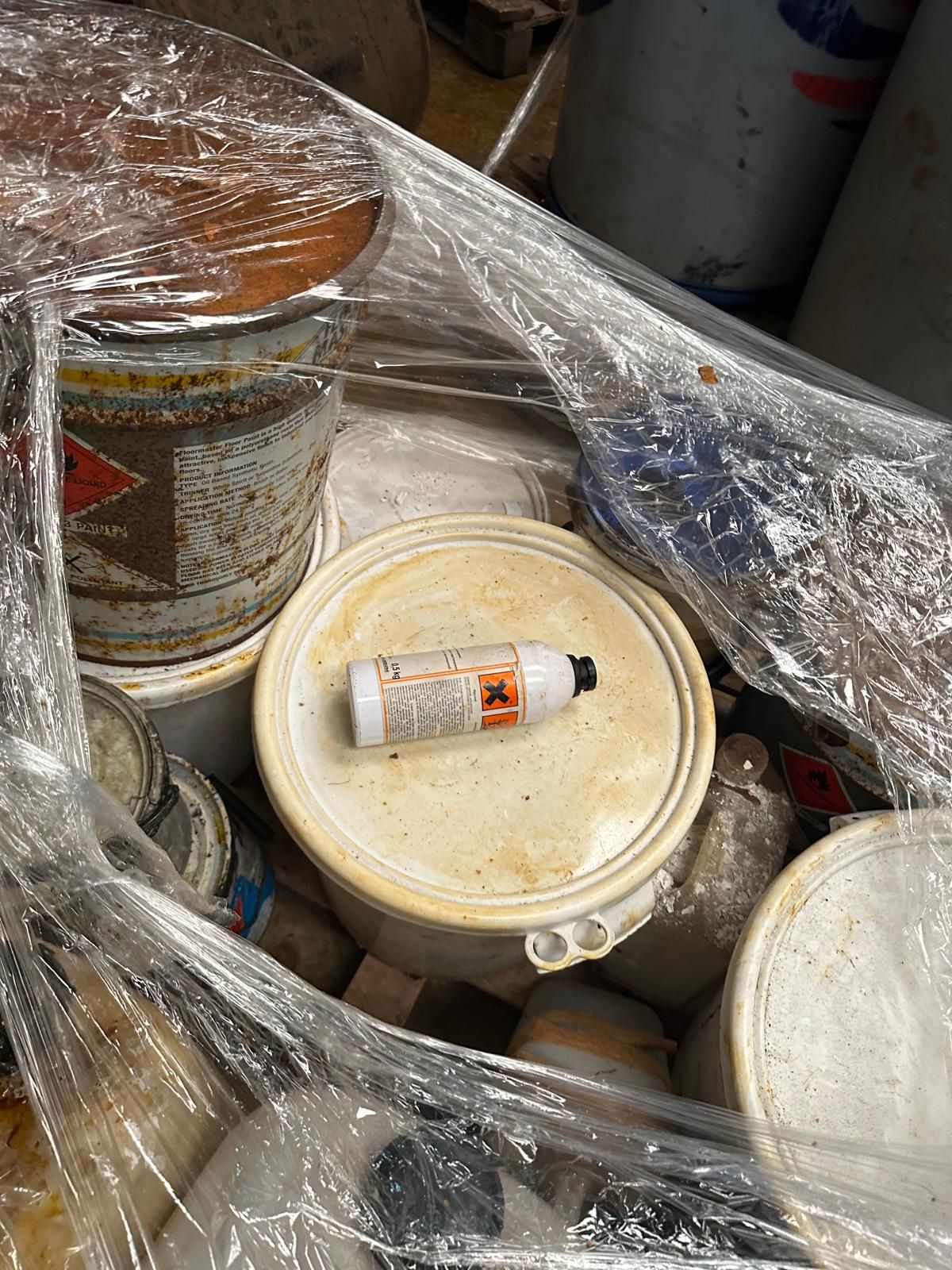
Part-used paint and coating tins, wrapped and set aside for classification separately from the general waste. -
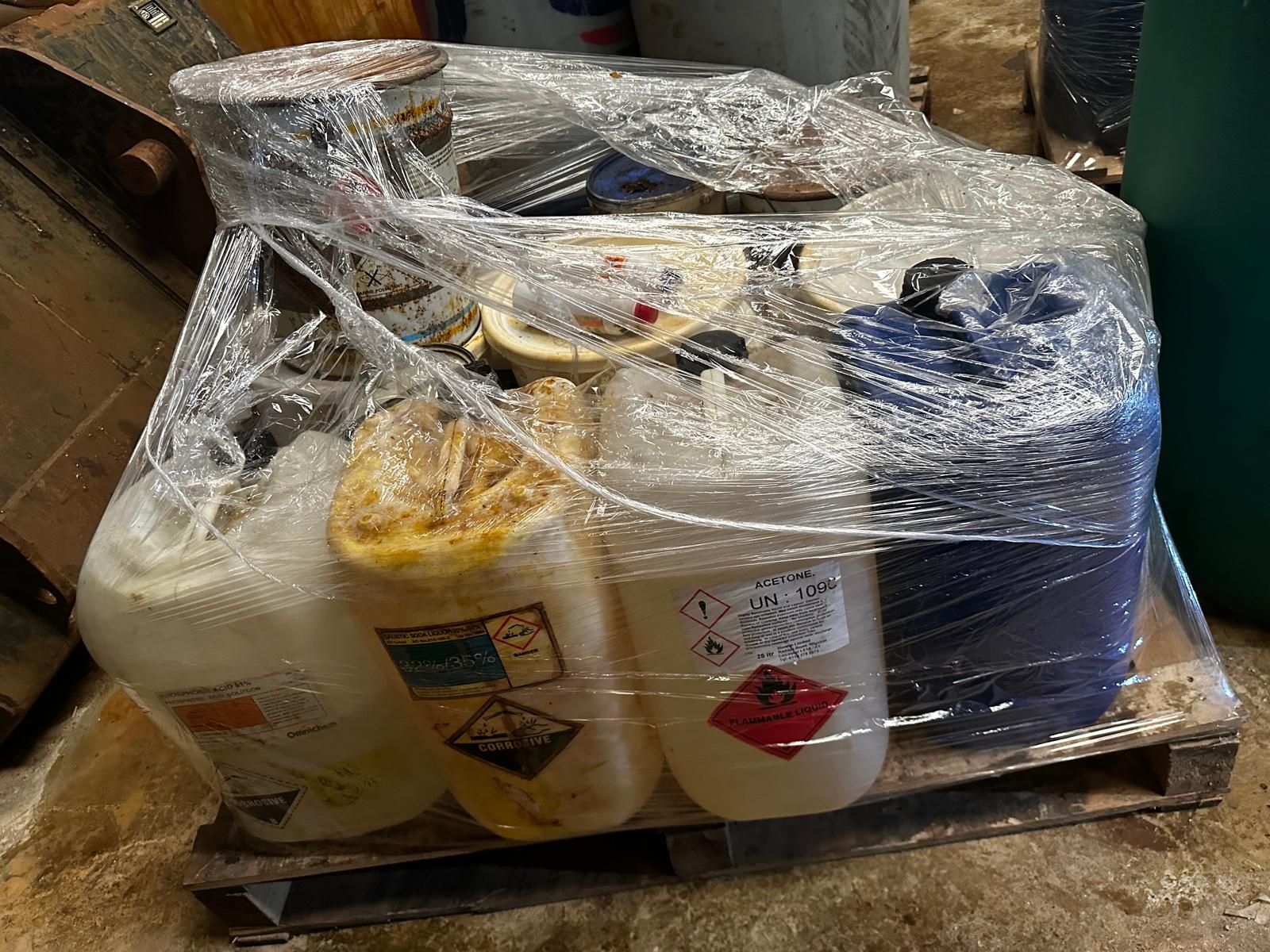
Corrosive and flammable chemical containers, identified by their hazard labels and palletised for compliant disposal. -
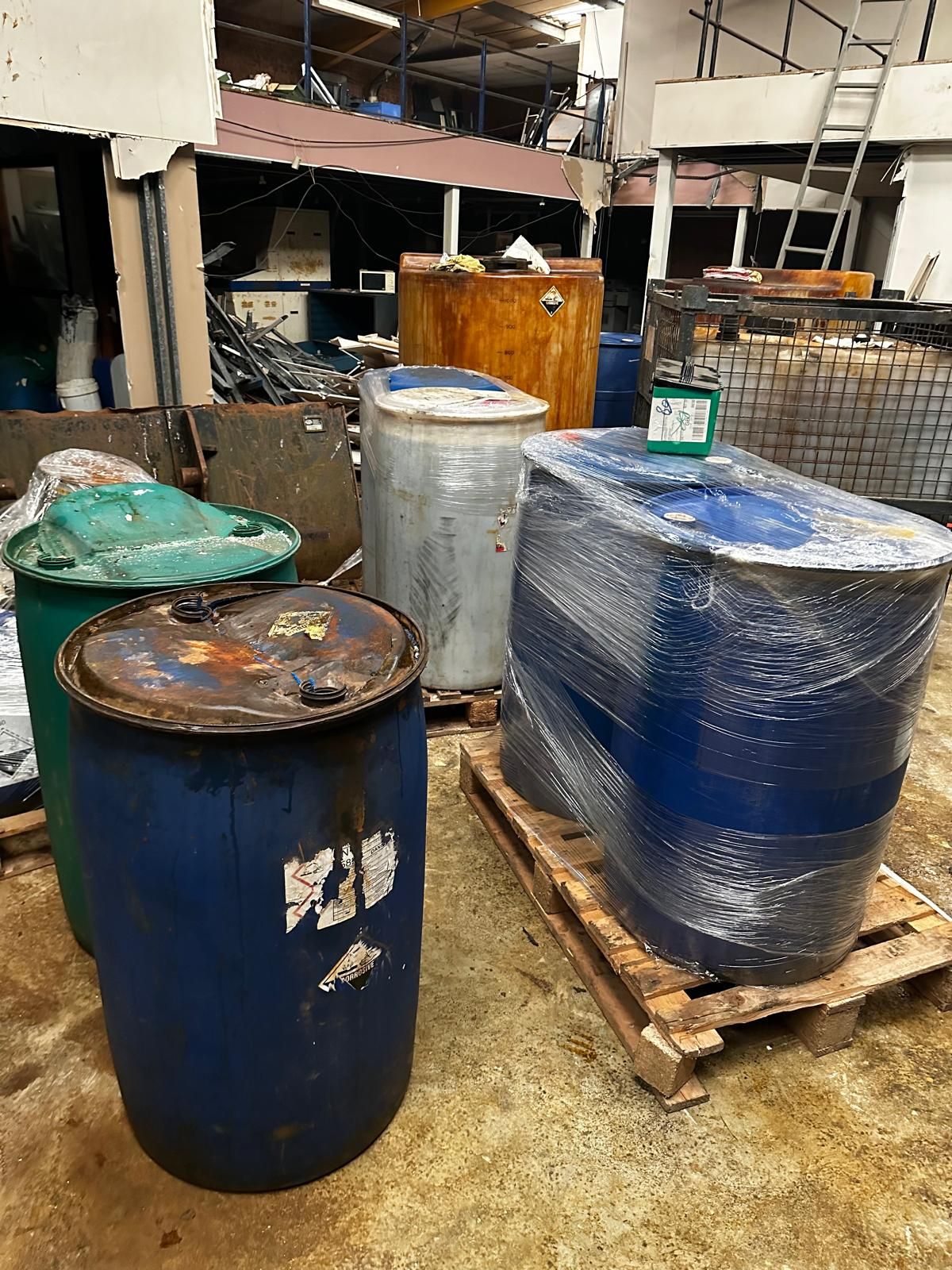
Redundant drums and a wrapped bulk container in the emptied unit, grouped ready for removal. -
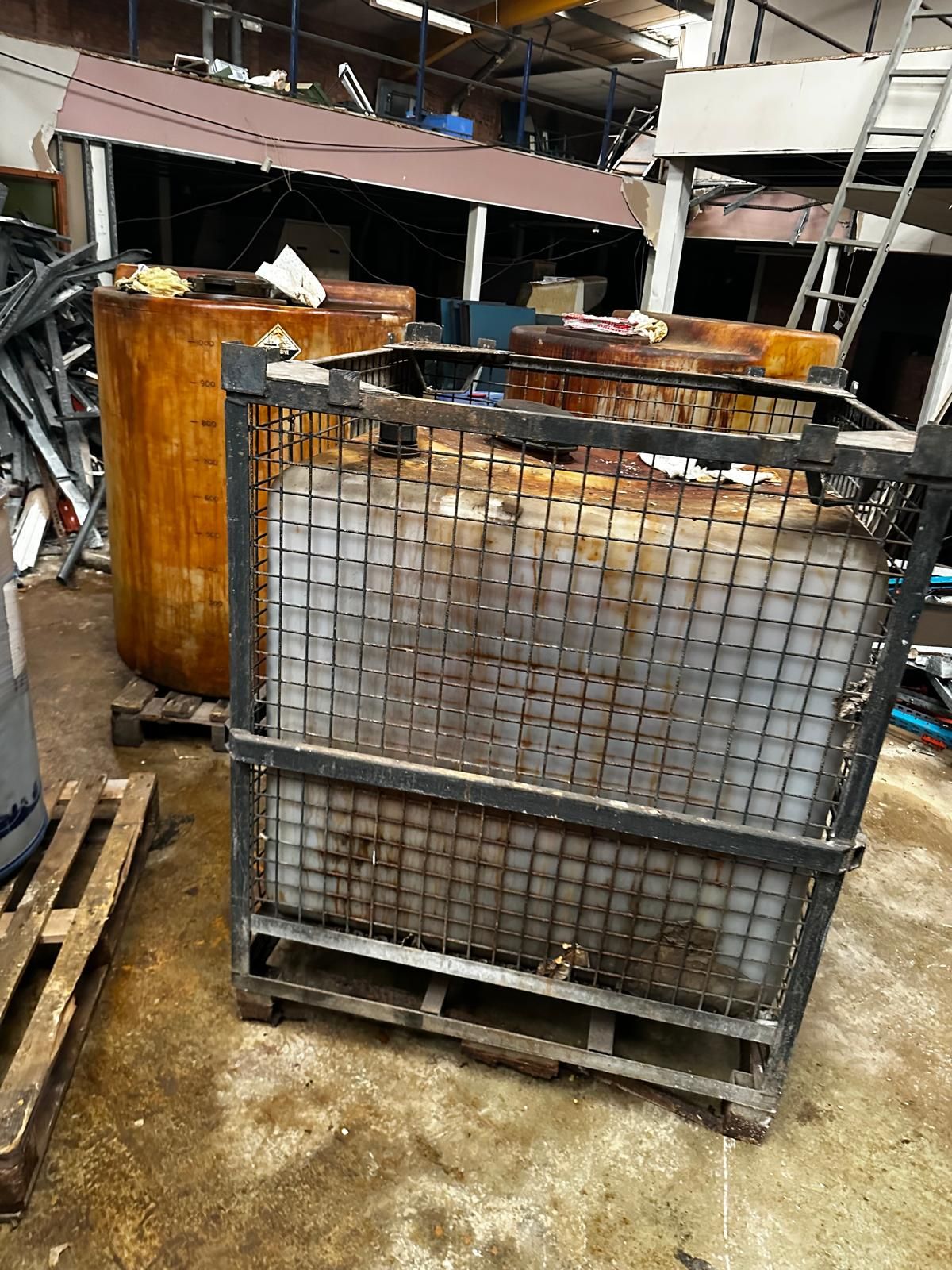
A caged IBC and redundant bulk tanks left in the unit, each to be categorised before removal. -
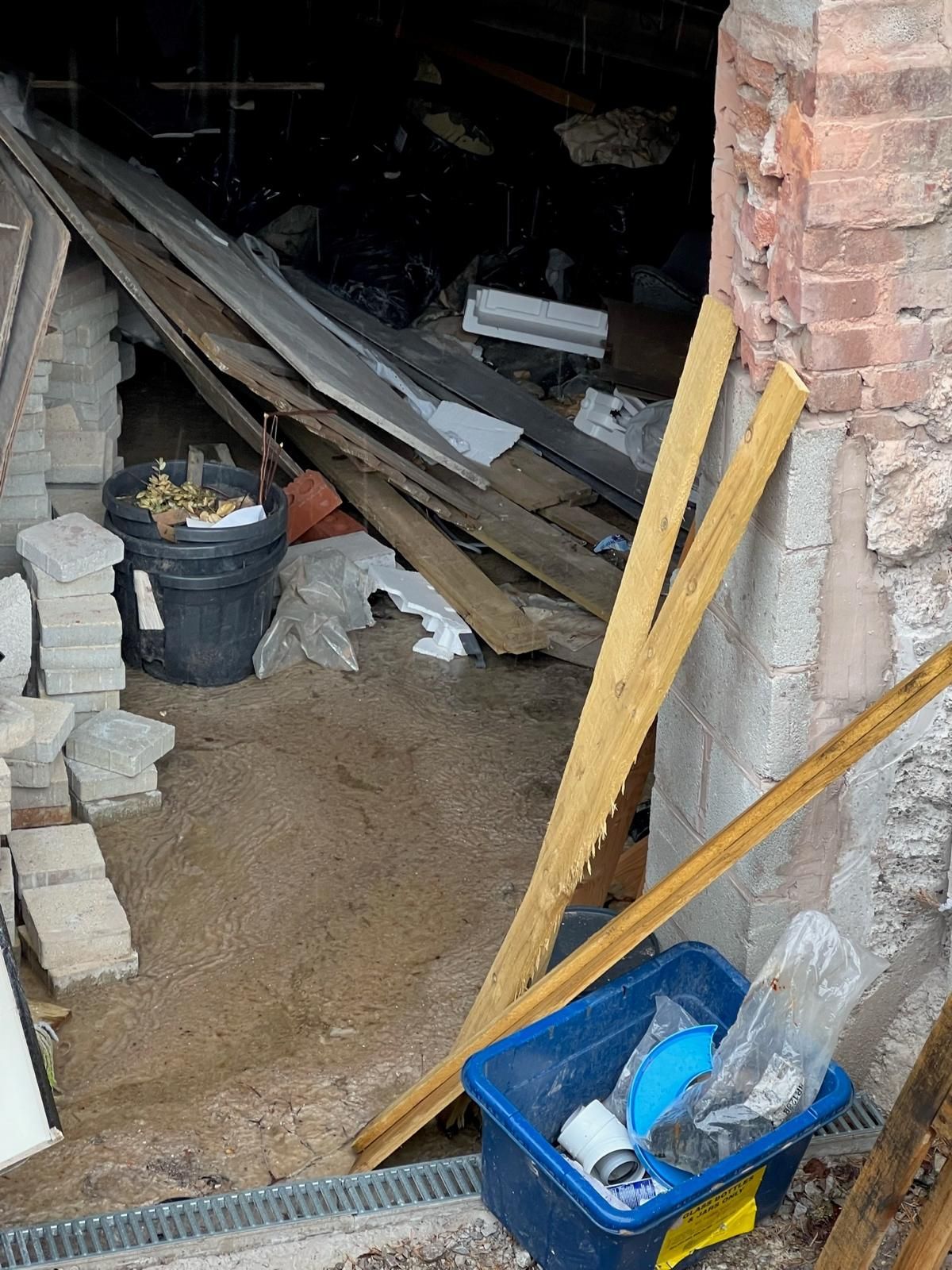
A storage void under the building, holding paving, timber and mixed waste to be sorted for recycling and disposal. -
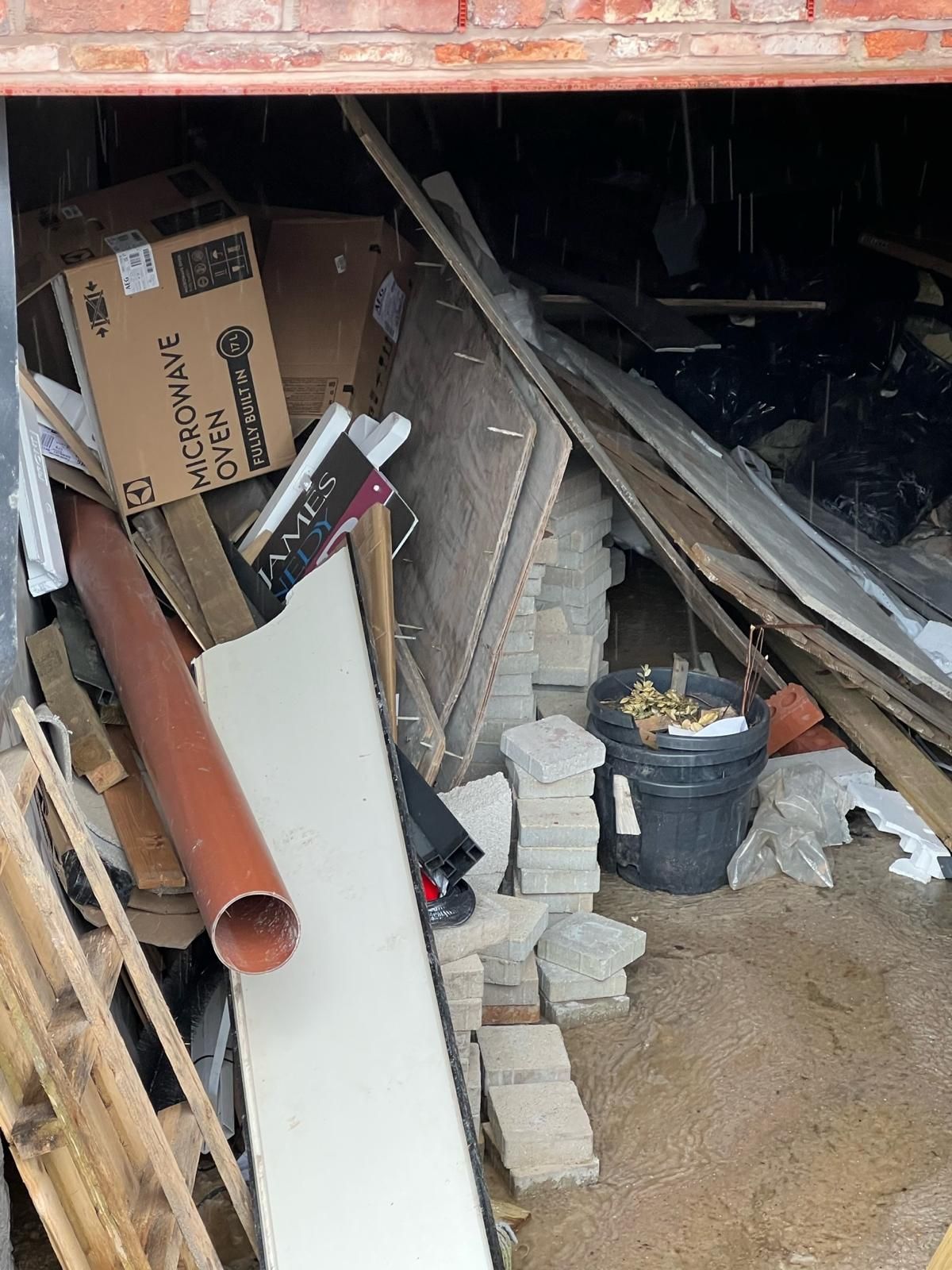
Bulky waste and packaging pulled out from beneath the building as the clearance worked through the site.


